











































































































































































































































































































































































































































































































































































































































































































































































































A chocolate bullet, a fake katta factory, and a brand that refused to be safe
“We were supposed to do food styling.”
That is how Nitin Tandon remembers the beginning of the Hocco × Mirzapur Bullet Ice Cream project.
There was no elaborate production brief waiting on the desk. No months-long development process. No grand plan to build a Mirzapur-inspired factory.
The Nitin Tandon Studios team was simply scheduled to join Hocco for a shoot involving the Mirzapur cast and crew.
Then came a seemingly innocuous request.
“Since you’re coming anyway, bring us some crazy ideas.”
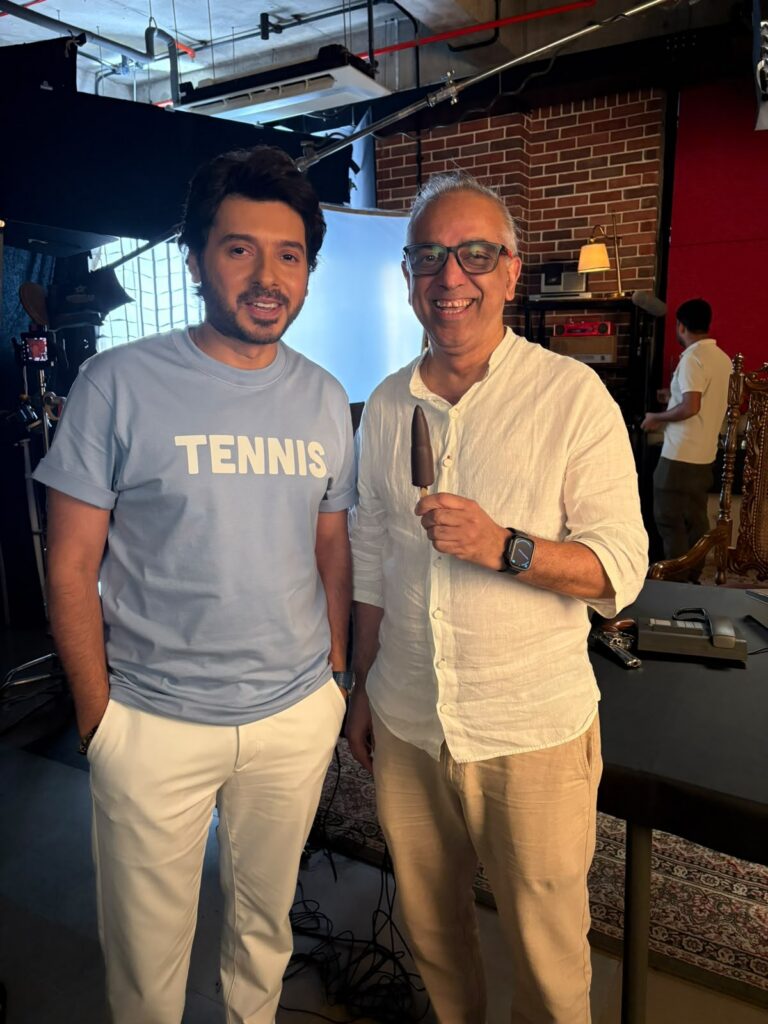
The team took that literally. Dharmesh Joshi came onboard
Three ideas were developed overnight.
One was selected the following morning.
And within roughly a week, what began as a food-styling assignment had turned into a complete film production — with a fictional Katta factory, custom bullet moulds, industrial machinery, specialised food styling, production design and a rather ambitious attempt to make chocolate look like molten metal.
For Nitin Tandon Studios along with Dharmesh Joshi, the project became an interesting demonstration of how far a food-production company can stretch when it moves beyond simply making food look good.
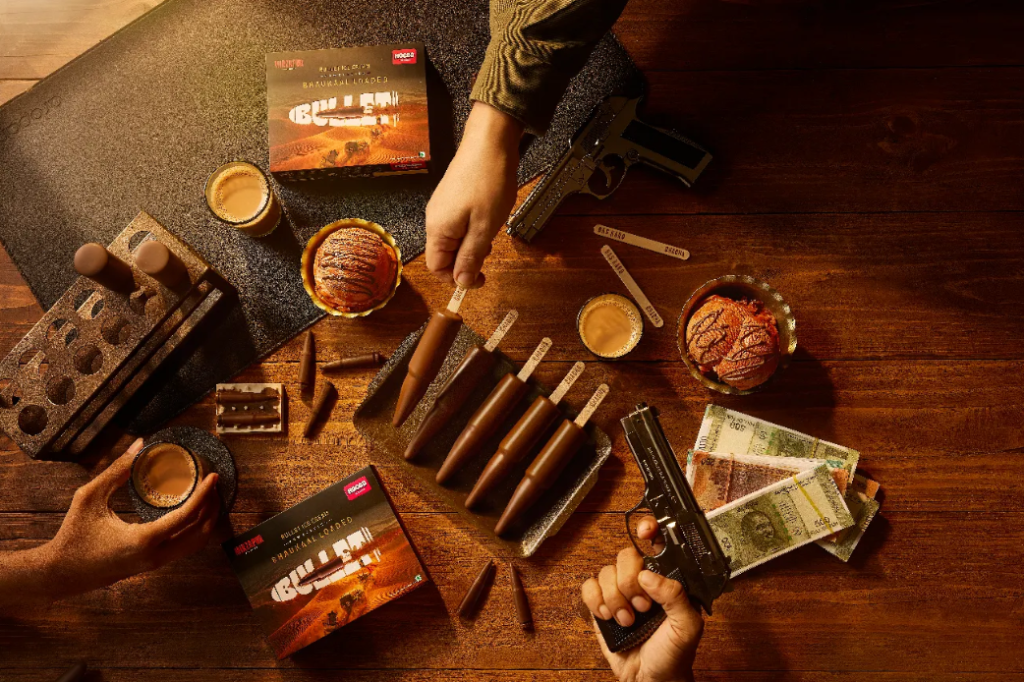
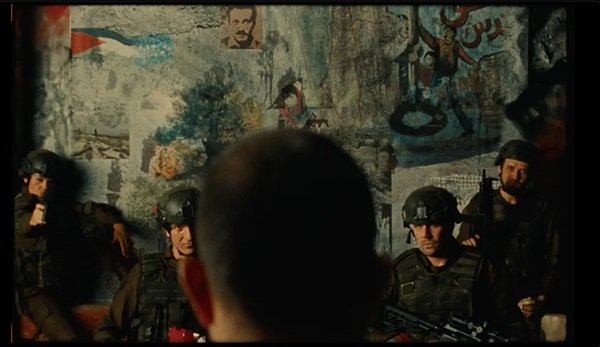
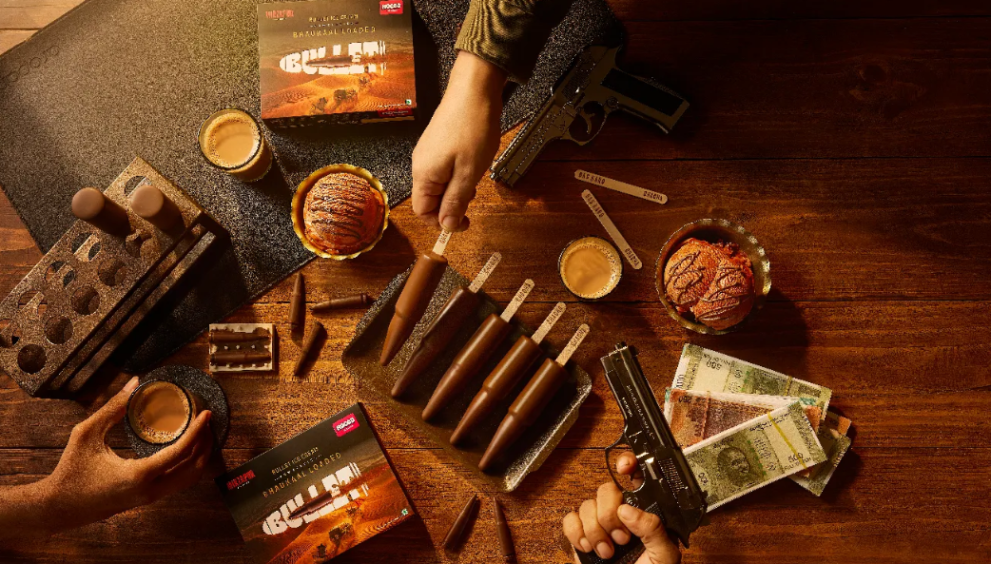
The idea: What if the Ice Cream Bullet was actually made in Mirzapur?
Hocco’s collaboration with Mirzapur: The Movie had already produced an unusual product — a Bullet-shaped ice cream.
The obvious route for a production team would have been to photograph the product dramatically.
The Nitin Tandon Studios team and Dharmesh wanted to go one step further.
The thought was:
What if the Bullet Ice Cream was actually being manufactured inside the world of Mirzapur?
That changed everything.
Suddenly, the product needed a factory.
The factory needed machinery.
The machinery needed a production process.
And the production process needed to feel believable.
“We didn’t want to make another ice cream film,” says Tandon. “The idea was to make the product feel like it belonged to that world.”
That distinction became the creative foundation for the film.
The strange case of chocolate becoming metal
One of the biggest challenges was making familiar food-production processes look like something completely different.
The team wanted chocolate to resemble molten metal.
The solution wasn’t to completely fake it with visual effects.
Instead, lighting, smoke, heat and food behaviour were used to create the illusion.
A red light helped give the chocolate a heated appearance. Hot smoke added atmosphere, while dry ice was used for the colder sequences.
The production team effectively took elements that belonged to a bakery or ice-cream facility and photographed them through the visual language of an industrial factory.
It was a recurring philosophy throughout the shoot:
The world could be fictional. The physical details had to feel real.
The factory had to be found before it could be filmed
The production challenge quickly moved beyond cameras and food.
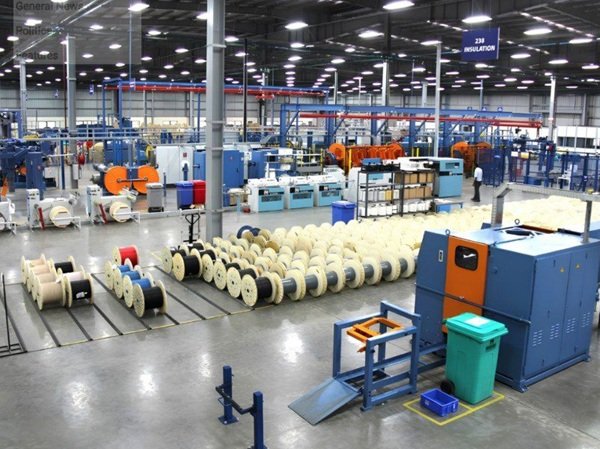
The team needed machinery that could convincingly become part of the fictional Katta factory.
So producer Akshay Narayankar and the art team began looking through industrial estates, workshops and factories.
More than ten locations were explored.
Equipment was sourced and adapted.
Chains were tested.
Props were fabricated.
Some elements came from unexpected places — including a scrap dealer who eventually provided the oversized industrial chains the team was looking for.
The production was constantly operating between two worlds:
What does the creative require?
and
How do we actually make that happen?
For Narayankar, that is where production becomes creative problem-solving.
“If the director wants something, the producer’s job is to figure out how to get it,” is essentially the philosophy that drove the exercise.
The Bullet was treated like a character
For a studio known primarily for food styling, the most fascinating part of the production was perhaps the treatment of the product itself.
The Bullet Ice Cream couldn’t simply be visually attractive.
It had to carry attitude.
Its shape had to hold.
Its surface had to photograph correctly.
Its texture had to remain appetising.
And it had to exist naturally within a much darker cinematic environment.
That is where Tandon’s food-styling experience became central to the production.
His approach has increasingly moved towards treating the product as part of the narrative rather than simply as an object being photographed.
“If you have to think, you have to become the product,” is how he describes the philosophy.
In this case, that meant asking questions that went well beyond styling.
How would a Bullet be manufactured?
How would it move through the factory?
How would it be inspected?
How should the audience first see it?
The ice cream wasn’t just the hero product.
It became a character in the film.
Why the team didn’t need a celebrity
The Mirzapur universe comes with its own cast of recognisable characters.
There was therefore an obvious temptation to build the film around celebrity.
The team considered it, including the possibility of using Makbul’s voice because of the character’s association with the gun-making world.
But the idea eventually moved in another direction.
The product itself had enough narrative strength.
Instead of using celebrity to create attention, the production focused on making the Bullet Ice Cream interesting enough to hold attention on its own.
That decision also made the film more product-led.
The Bullet didn’t need to borrow the spotlight. It had its own story.
Even the casting changed on set
The production wasn’t immune to the kind of spontaneous decisions that happen when an idea meets a real set.
The performer originally considered for the final eating sequence didn’t quite fit the world the team had created.
He looked, according to the team, “too nice.”
The character coming out of this fictional factory needed to have a different physical presence.
So the team changed direction.
It’s a small detail, but it captures the nature of the production: the final film wasn’t simply being executed from a locked document.
The team was continuously responding to what they saw in front of the camera.
The bigger shift: From food stylist to creative production partner
Perhaps the most significant story behind the campaign is what it says about Nitin Tandon Studios itself.
The studio has been associated with food styling for more than three decades.
But food advertising has changed considerably.
The food stylist is no longer necessarily working at the end of the creative chain.
The person who understands how a product behaves can influence how it should be shot, lit, directed and ultimately presented.
That has led Nitin Tandon Studios to expand into concept development, direction and end-to-end production.
On this project, Dharmesh Joshi, as director and creative director, brought the narrative and visual perspective, while Tandon brought his understanding of food, styling and product behaviour.
The two approaches were complementary.
One asked:
“What is the story?”
The other asked:
“Will the food actually do that?”
The film was built somewhere between those two questions.
Why this matters to food advertising
There is a larger industry conversation underneath the campaign.
Food advertising has become increasingly polished.
But as production becomes more accessible, visual polish itself is becoming less distinctive.
The familiar language of food advertising — slow motion, chocolate pours, perfect surfaces, ingredient splashes and immaculate kitchens — is now available to almost every brand.
The challenge is therefore moving from production quality to creative relevance.
As Tandon and Narayankar see it, brands don’t simply need more content.
They need content that gives consumers a reason to stop.
That requires production teams to understand the product, the culture surrounding it and the audience consuming it.
The Hocco × Mirzapur film is an example of that thinking.
The product wasn’t placed into a world after the creative idea was finished.
The world was built around the product.
The production became the story
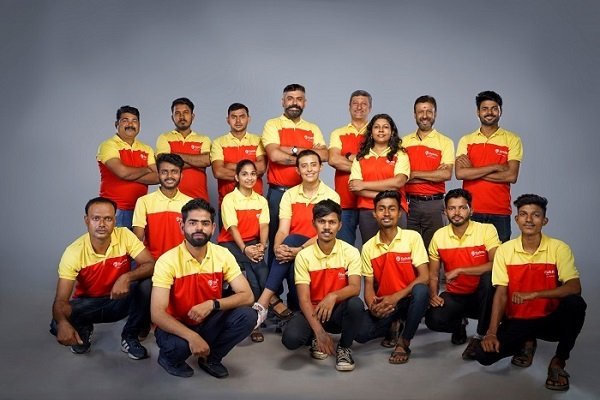
The campaign was eventually brought together by a team spanning food styling, direction, cinematography, production design, editing and colour.
- Brand: Hocco
- CMO: Roli Shrivastava
- GM Marketing: Charles Thomas
- Production House: Nitin Tandon Studios
- Executive Producer: Akshay Narayankar
- Producer: Arth Rathod
- Director & Food Stylist: Nitin Tandon
- Director & Creative Director: Dharmesh Joshi
- Food Stylist: Pooja Patil
- DOP: Titu Jina
- Production Designers: Sayali & Anaya Joshi
- Offline: Siddhesh Sawant
- Grading: Swapnil Patole
- Stills Photographer: Mihir Hardikar
What started with a casual request to “bring some crazy ideas” eventually required industrial location hunting, custom fabrication, specialised food styling, cinematography and post-production — all within a compressed production window.
And perhaps that is what makes the project interesting from a production perspective.
The final film doesn’t show the chaos behind it.
It doesn’t show the industrial estates.
The scrap dealer.
The chains.
The custom moulds.
The discussions around heat and cold.
The casting change.
The equipment decisions.
The constant question of how to make something look bigger than the resources available.
It simply shows a Bullet Ice Cream existing inside a world where, somehow, it makes sense.
That is the job of production at its best.
Make the impossible look inevitable.
For Nitin Tandon Studios, the Hocco × Mirzapur project represents a broader evolution — from a studio that specialises in making food look good to one increasingly involved in deciding how food can become a story.
And in this case, the story began with a very simple question:
“Can you bring us some crazy ideas?”
The team did.
The answer was a Bullet.
And, rather unexpectedly, it was made of ice cream.
Instagram: https://www.instagram.com/reels/DcYyZodCpMk/
Linkedin: https://www.linkedin.com/posts/chefnitintandon_hocco-mirzapur-hoccoxmirzapur-ugcPost-7497993181914087426-dvij/